The leopards next door: Inside Mumbai’s wild urban landscape

WeWork Staff
October 27, 2026
Summarize this article with AI
Mumbai leopards share Sanjay Gandhi National Park with a city of millions. See how WCS-India and WeWork India Impact track them and build coexistence.
TL;DR
- Mumbai’s Sanjay Gandhi National Park sits against a megacity, making it one of the rare places where leopards and millions of people share a boundary.
- Camera traps identify individual leopards by their rosettes, which are as unique as fingerprints, letting researchers trace movement patterns that are impossible to observe directly.
- The latest survey recorded leopards at 47 of 54 camera sites, alongside 14 other wild species that form a working ecosystem inside the city.
- Coexistence depends on calm, evidence-led responses, so the project has trained 450+ college students and journalists in responsible coverage of leopard sightings.
- WeWork India Impact supports Living with Leopards, helping WCS-India reach over 10,000 zoo visitors and lead WeWork members on nature trails through SGNP.
A forest in the city: Following Mumbai’s leopards
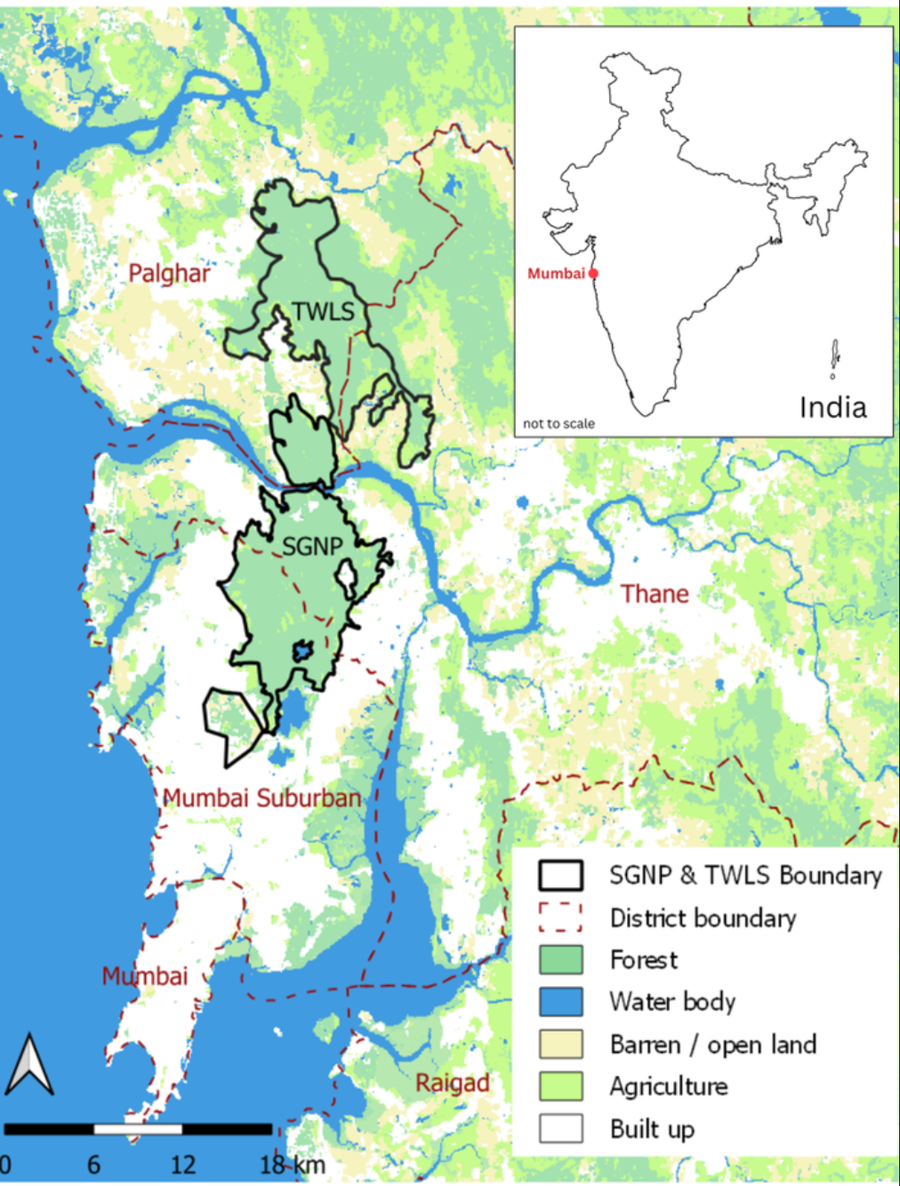
There are only a few cities where a gaze across a sea of concrete reveals a forest where leopards roam.
In Mumbai, Sanjay Gandhi National Park (SGNP) meets roads, high-rises, and dense colonies - a wilderness carved directly into a megacity. Here, humans and apex predators share a razor-thin boundary.
For WCS-India, tracking these big cats is about more than counting numbers. Through the Living with Leopards project, supported by WeWork India Impact, researchers map movements, monitor co-existing wildlife, and foster community awareness. The goal isn't keeping wilderness and urban life apart, but learning how to safely navigate a landscape already shared in the dark.
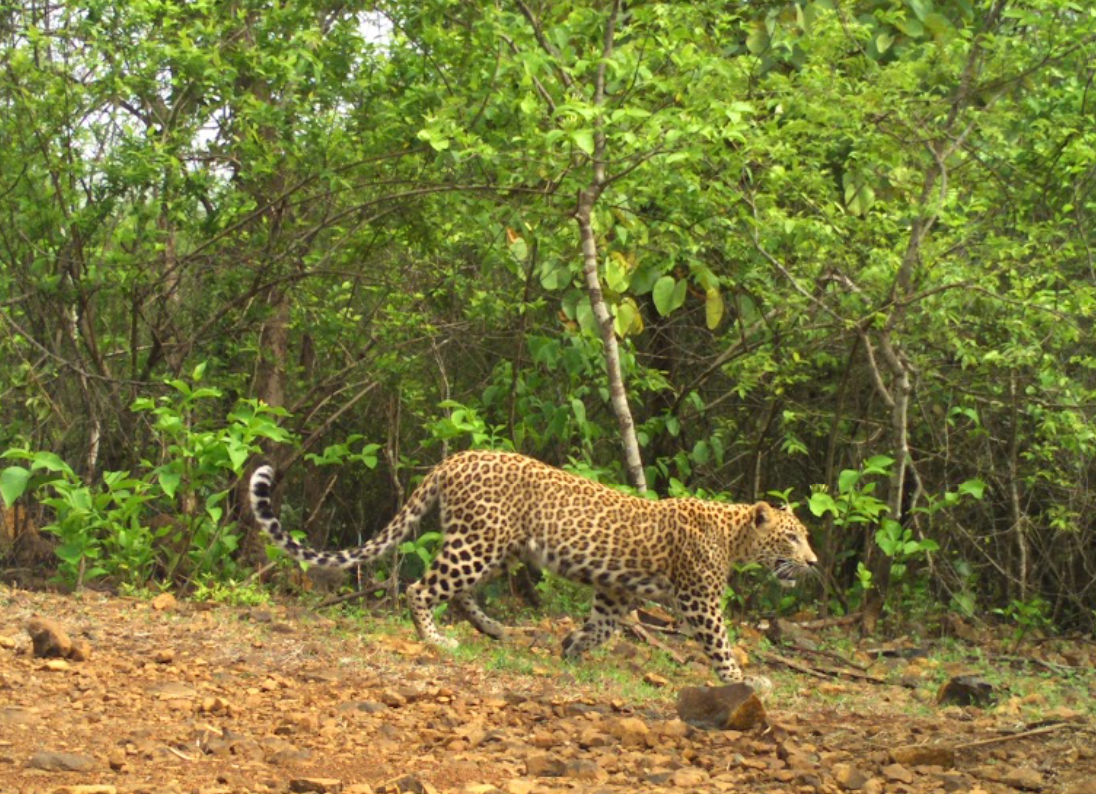
A leopard leaves a signature
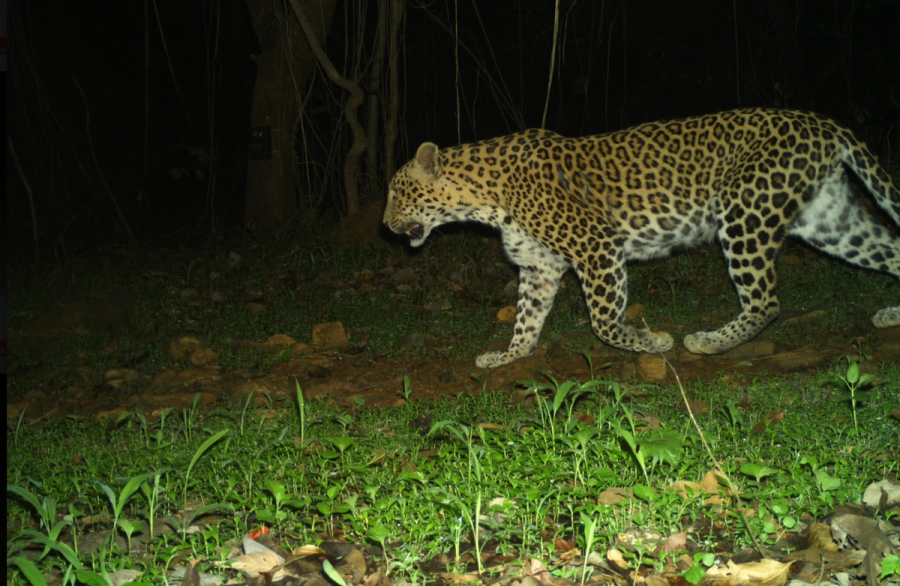
A leopard rarely announces itself. It glides through the dark forest without making a sound, vanishing long before human eyes can spot it.
Yet it carries an unmistakable signature on its skin.
The rosettes painting a leopard’s coat are completely unique - as distinct as human fingerprints. When silent camera traps trigger along the dark trails, infrared sensors capture these distinct patterns, giving researchers a way to trace individual ghosts through the jungle.
During the latest monitoring exercise:
- 1,064 trap nights recorded across 54 camera locations in SGNP.
- 26,232 wildlife images logged during the survey period.
- 540 leopard photo-captures recorded in total.
- 47 out of 54 sites detected leopard activity, highlighting their widespread presence across the park.
But the cameras were recording something bigger than a single species.
They were watching a forest.
The forest beyond the leopard
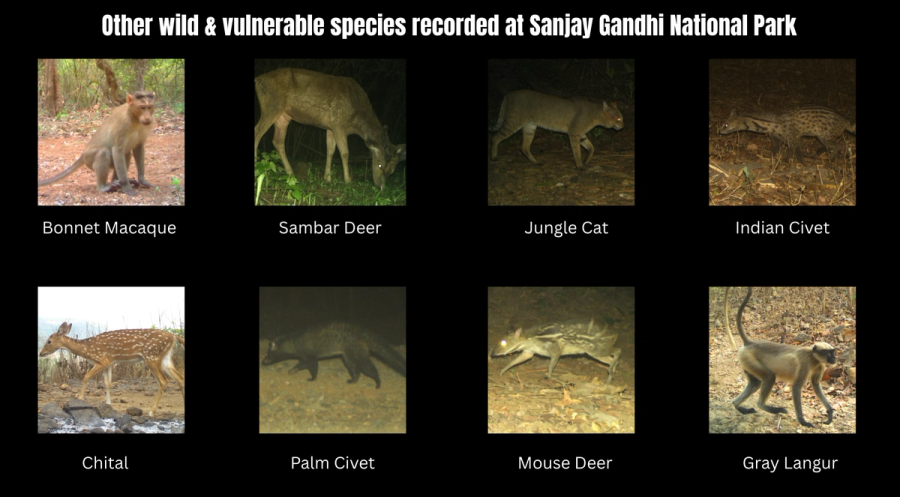
Alongside the leopard, the camera traps recorded 14 other wild species.
Key wildlife and ecosystem highlights
- Primary prey: Sambar and chital moving through the dense forest.
- Other herbivores: Barking deer, mouse deer, wild pigs, and porcupines.
- Predators and scavengers: Jungle cats, golden jackals, civets, and mongooses.
- Primates and more: Multiple monkey species contributing to a fully balanced ecosystem.
A leopard cannot be understood separately from the animals around it. Its prey, competitors and scavengers reveal a functioning ecological community - one that continues to exist within the boundaries of a vast metropolis.
The photographs therefore offer more than a species list. They provide a glimpse into how an urban forest works.
A city at the forest edge
Unlike remote wilderness, SNGP sits directly against a megacity of millions. Leopards regularly utilise these forest edges, occasionally slipping into neighbouring urban colonies.
When a leopard appears near homes or roads, every sighting brings urgent questions: Is it passing through? Is it returning to a familiar haunt? Is it an individual seen before?
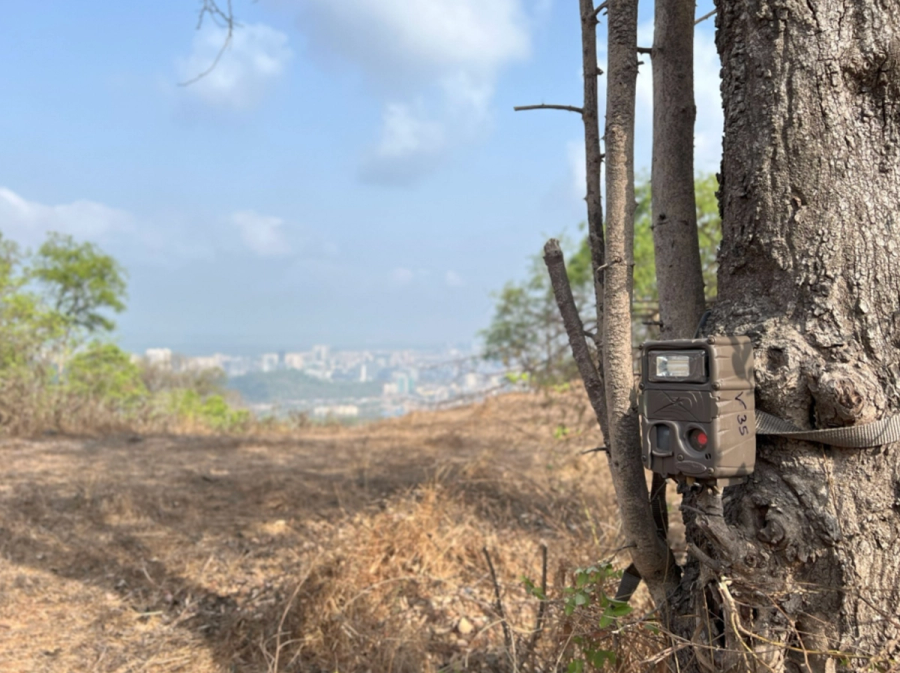
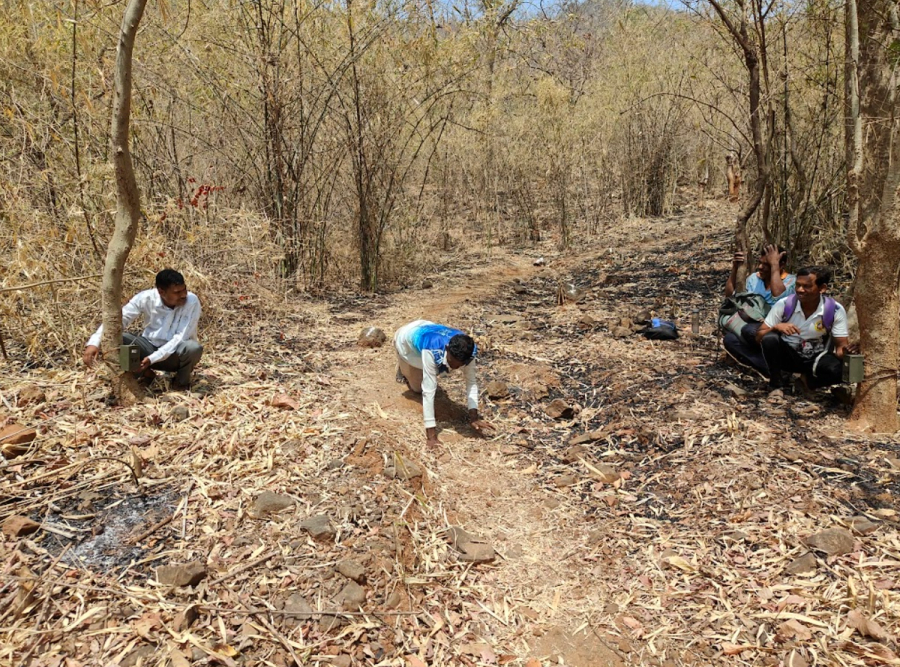
To answer this, simple motion-triggered camera traps maintain a silent watch. Over time, thousands of images reveal complex movement patterns impossible to observe directly. In response to urban sightings, WCS-India added around 200 trap nights of monitoring across peri-urban landscapes.
The goal is not simply to find the animal.
It is to understand it.
Learning to live with a wild neighbour
Science can tell us where a leopard goes. Coexistence depends on what people do when it gets there.
That is why Living with Leopards extends beyond forests and camera traps.
Community engagement and awareness initiatives
- 1,500+ school students reached through leopard awareness sessions in Nashik.
- 450+ college students and journalists trained on urban ecology and responsible media coverage.
- Multi-stakeholder reach: Collaborating with communities, youth, media, and forest department staff to build a safer shared landscape.
The distinction matters.
Where people and wildlife overlap, fear spreads faster than facts. A single viral photograph or sensational headline can spark panic across an entire neighbourhood.
Responsible communication is vital to conservation - as is preparing first responders. WCS-India conducts targeted training for Maharashtra Forest Department personnel, focusing on camera trapping, population estimation, and conflict management.
The aim is straightforward: when an encounter occurs, decisions should be guided by evidence rather than alarm.
Taking the leopard story into the city
Sometimes conservation begins with a camera trap. Sometimes it begins with a conversation.
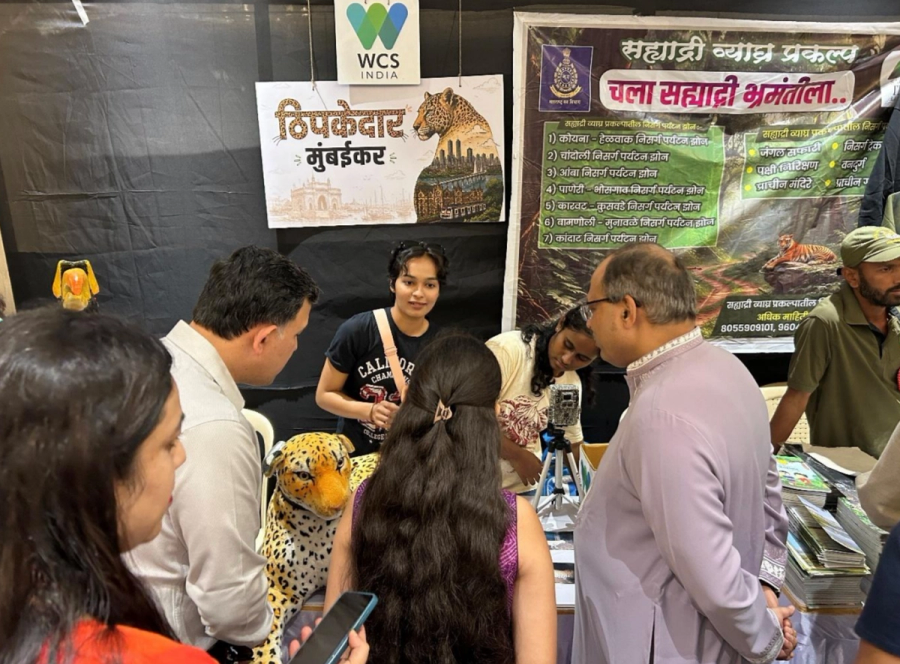
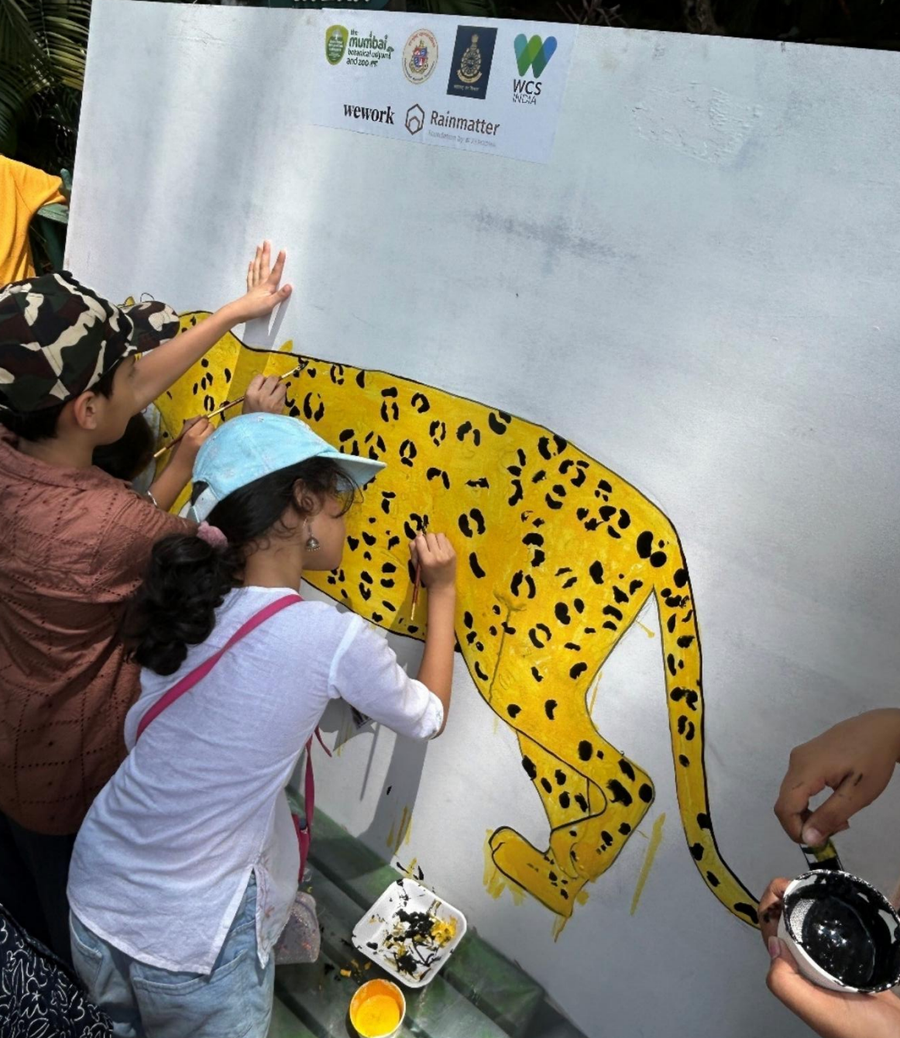
To mark International Leopard Day, WCS-India partnered with Byculla Zoo for a three-day public outreach event:
- Massive Reach: Over 40,000 zoo visitors, with 10,000+ people directly engaged.
- Interactive Learning: Visitors explored camera-trap images, telemetry data, and learned to identify individual leopards by their unique rosettes.
For a moment, a leopard that usually exists in the public imagination as a fleeting shadow became something people could truly understand - not simply fear.
That shift in perception matters.
Seeing the city differently
The same idea shaped the project’s engagement with WeWork members.
During World Environment Day outreach and nature walks, WCS-India team members including Nikit Surve and Debolina Das Sharma led WeWork members along a nature trail at SGNP, drawing attention to the wildlife and ecological signs that often go unnoticed.
A forest does not always reveal itself dramatically.
Sometimes it is a track in the soil. A scrape on a tree. A distant call. Or simply the knowledge that a leopard passed through the same landscape only hours before.
The more closely we look, the more we realise that urban nature is not an empty space between buildings.
It is alive.
The larger lesson:
The story of Mumbai’s leopards is often framed as a big cat defying the odds. But camera traps reveal a far richer truth: 54 leopards sharing an urban sanctuary with hundreds of wild species, thriving alongside millions of human neighbours.
Conservation cannot start and end with a single predator. To protect the leopard is to safeguard the deer it hunts, the forest that shelters it, and the complex web of life binding them together. Equally, it means preparing people to share this delicate edge.
That is the true heart of Living with Leopards - not forcing wilderness and metropolis apart, but embracing a relationship that already exists.
In Mumbai, the forest has never been as far away as it seems. Leopards slide through the shadows while a city sleeps. The challenge - and our greatest opportunity - is learning to see wildlife and megacity as part of one shared landscape.
Related Blogs:

WEWORK LABS
With the Indian startup ecosystem gaining maturity, there are a number of things changing—startups are thinking more global in their ambitions, more companies are taking their companies to the market

RESOURCES
In this blog, we will explore innovative ways to utilise meeting rooms effectively, ensuring they become key assets in your business strategy.

WORKSPACE SOLUTIONS
A workspace is not just about the work. It is also about providing employees a space that allows them the freedom to work where, when, and how they want. Flexibility...