
SUSTAINABILITY IMPACT
WeWork India Sustainability Summit 2025: Decarbonising commercial real estate

WeWork Staff
October 31, 2025
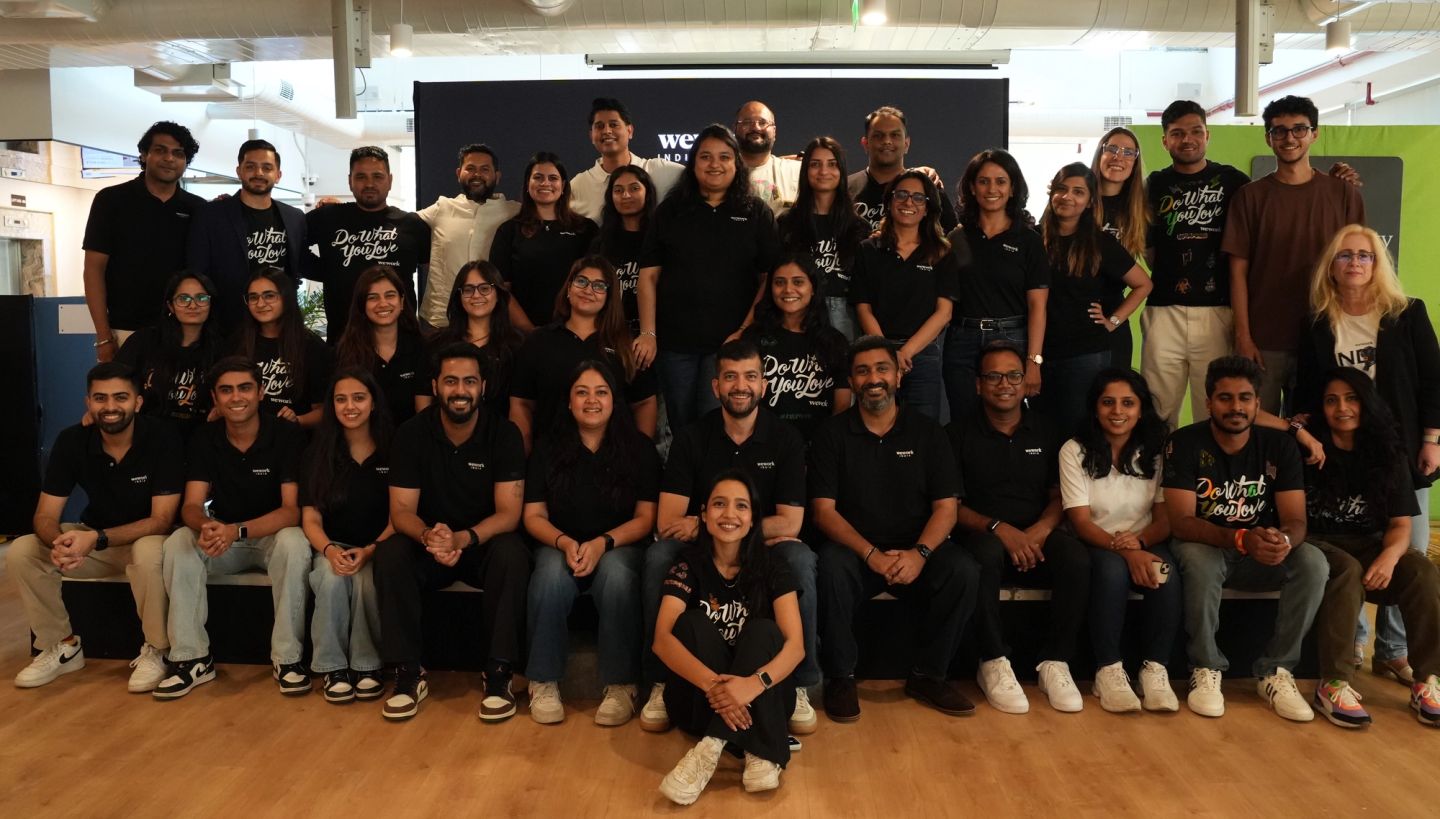
On 24th September 2025, WeWork India hosted its third Sustainability Summit at WeWork Forum, Gurugram, bringing together innovators, visionaries, and leaders shaping the future of sustainable real estate.
This year’s theme, ‘Decarbonising commercial real estate’, explored how we can design, build, and operate spaces for a low-carbon future. Top industry experts, sustainability advocates, and solution providers came together to share insights, strategies, and actionable steps for a greener built environment.
What made this year’s summit truly special was the diverse line-up of speakers and panellists, each bringing unique perspectives and tangible ideas. We’re deeply grateful for their support, insights, and the collaborative energy they brought to the event.
A platform for action and innovation
The summit featured three thought-provoking panel discussions and an engaging fireside chat with Bhumi Satish Pednekkar, actor, entrepreneur, and founder of Backbay.
Bhumi shared her journey of building Backbay, a lifestyle brand rooted in eco-friendly materials, energy-efficient design, and circular practices, and spoke about what sustainability means to her personally. Her story inspired attendees to move beyond awareness and towards action in their everyday choices.
Panel 1 — Cutting carbon in the built environment: Why, how and how much?
Karan Virwani, Managing Director & CEO, WeWork India (Moderator)
Sahil Vachani, Vice Chairman & Managing Director, Max Estates
Gaurav Kumar, Managing Director, CBRE
Guruprakash Sastry, Head, Climate Action, Infosys
Key takeaway:
The panel underscored that smarter design and material choices at the construction stage are key to reducing embodied carbon before operations even begin. Panellists highlighted the need for stronger policy support and financial incentives to make sustainable real estate more accessible and scalable.
They noted that ESG metrics and investor expectations are increasingly shaping how value is defined across commercial real estate. Finally, panellists agreed that technology and retrofitting will play a crucial role in driving long-term energy efficiency and decarbonisation across the built environment.
Panel 2 — Capital for climate: Financing the future of real estate
Sathyanarayanan Sankaran, Urban Strategy Lead, Rainmatter Foundation (Moderator)
Sriram Kuchimanchi, Founder & CEO, Smarter Dharma
Ray V Kallimel, Head, Asset Management, Embassy REIT
Annu Talreja, Founder & CEO, Accacia.ai Shiva Shanker, Partner, Ankur Capital
Key takeaway:
Global investors are increasingly rewarding low-carbon portfolios, creating a clear premium for assets with measurable sustainability outcomes. Developers are responding by retrofitting buildings for energy efficiency and leveraging green financing tools to drive long-term value.
Meanwhile, tenant and broker demand for certified, sustainable spaces is influencing design, materials, and operations. With digital tools, circular design, and sustainable materials, the real estate industry is accelerating measurable decarbonisation at scale.
Panel 3 — Beyond the façade: Truth and transparency in sustainability
Saurabh Kumar, Vice President, India, Global Energy Alliance for People and Planet (GEAPP) (Moderator)
Vasudevan Suresh, Chairman, IGBC Policy and Advocacy Committee
Gagandeep K. Bhullar, Founder & CEO, SuperHumanRace
Rijit Sengupta, CEO, Centre for Responsible Business
Anubhav Gupta, Senior Real Estate C-Suite Leader, FRICS – CSR, ESG & Sustainability
Key takeaway:
True credibility comes from measurable impact, not marketing claims. Accurate reporting on energy, waste, and emissions, backed by independent audits, helps bridge the gap between promise and performance.
Unified standards, third-party verification, and clear ESG metrics are essential to curbing greenwashing and ensuring accountability across the value chain. With digital tools enabling real-time tracking and benchmarking, sustainability efforts are becoming more transparent, data-driven, and scalable than ever before.
Sessions and engagement
Climate quiz by BBC Media Action
An interactive quiz that challenged attendees’ knowledge of climate change and sustainable practices, making learning both fun and memorable.
Sustainable construction with Rainmatter Foundation
This session highlighted innovative approaches to building greener spaces, from eco-friendly materials to energy-efficient design strategies. Attendees gained practical insights into how sustainable construction can reduce carbon footprints while maintaining functionality and aesthetics.
AI in sustainability with Breathe ESG
This discussion explored how artificial intelligence is transforming sustainability efforts from optimising energy usage to tracking carbon emissions and improving operational efficiency. The session demonstrated how technology can be a powerful tool in achieving measurable environmental impact.
Innovation at work: Vendor and student showcases
The summit also hosted 23 vendor showcases, highlighting innovative climate technologies, circular materials, and sustainable products, from fabric-waste solutions to conscious coffee brands.
Students from Gosharpener presented inspiring sustainability projects, including low-cost air and water filters, demonstrating the creativity and purpose of the next generation.
List of vendors:
Blackbazacoffee I The Anonymous Indian Charitable Trust I Digital Paani I Breathe Esg I Smart Joules I Hedrad I Greenr Cafe I Earth Fokus I Climes I Chanj clothing I Orah eco I Tatsat Store I India hemp organics I Otso Deli I Backbay I Moonwalk coffee I NeoSan I Green Mantis I Svatanya I Dharaksha Ecosolutions I BBC Media Action I Econscious
Free, inclusive, and sustainable
Every year, the WeWork India Sustainability Summit is entirely free for anyone who wishes to attend or participate as a panellist or vendor. We carefully select vendors who are making a meaningful impact on sustainability, ensuring their work aligns with our mission.
We’re proud to share that the event’s entire carbon footprint was fully offset through Climes, with WeWork India neutralising 28,000 kg of CO₂ emissions.
Of the 43 kg of event waste collected, 100% was responsibly processed, ensuring none ended up in landfills. Our waste management initiatives further prevented 77.7 kg of CO₂ emissions, equivalent to driving 320 km in an average petrol car.
Thanks to NeoSan incinerators, we safely incinerated 11 kg of additional waste (4 kg sanitary and 7 kg bathroom), avoiding approximately 23.41 kg of CO₂ emissions, the same as driving 94 km in a petrol car.
Sustainability was central to every aspect of the event setup:
- No single-use plastic
- Sustainable event materials wherever possible
- Only vegetarian food served
A collective commitment
The WeWork India Sustainability Summit 2025 reinforced a vital truth - decarbonisation is a shared journey. Whether through smarter design, responsible financing, or technology-driven transparency, creating a sustainable built environment requires collaboration, innovation, and courage.
A big shout-out to all our amazing panellists, inspiring vendors, and of course, our incredible sponsors - Breathe ESG, Featherlite, K2B Secure Solutions, and Pace Seating, for making this summit possible. Your support and expertise helped us create a truly impactful event.
If you're interested in partnering with us for future sustainable events, please reach out to us at csr@wework.co.in.
Related Blogs:

SUSTAINABILITY IMPACT
Hiring the right candidate is one of the most important aspects of building a successful company.
SUSTAINABILITY IMPACT
At WeWork India, sustainability isn't just about our CSR and sustainability initiatives; it's woven into the fabric of our brand.

SUSTAINABILITY IMPACT
As the world becomes more conscious of environmental issues, the demand for sustainable office spaces has significantly increased.